
Nasi kuning or yellow rice is a traditional Indonesian dish that holds deep cultural significance and culinary value This golden hued rice infused with turmeric coconut milk and a blend of spices is more than just a staple foodits a symbol of celebration prosperity and community From its origins in Indonesia to its adaptations across neighboring countries nasi kuning reflects the rich diversity of Southeast Asian cuisine
The Origins and Significance of Nasi Kuning
Nasi kuning is deeply rooted in Indonesian culture and is often associated with significant life events such as birthdays weddings and religious ceremonies Its vibrant yellow color derived from turmeric is symbolic of wealth and good fortune In many regions it is served in the form of a tumpeng a cone shaped rice dish that represents a mountain signifying abundance and gratitude
The tumpeng tradition is especially prominent in Java where the dish is used in slamatan syukuran ceremoniesrituals of thanksgiving During these events the top of the tumpeng is cut and offered to the most respected individual embodying the spirit of sharing and humility In Bali nasi kuning is also an integral part of the kuningan ceremony one of the four sacred colors in Balinese culture representing purity and spiritual energy

The Process of Making Nasi Kuning

The preparation of nasi kuning involves a careful balance of ingredients and techniques The process begins with washing and soaking the rice followed by cooking it with coconut milk turmeric and aromatic spices like lemongrass and bay leaves This method not only imparts a rich flavor but also gives the rice its distinctive golden hue
Once cooked the rice is typically mixed thoroughly to ensure even distribution of the spices It is then served alongside a variety of side dishes including fried chicken omelets tempeh and sambal goreng spicy fried vegetables Additional garnishes like cucumber slices and crackers complete the meal offering a mix of textures and flavors
Regional Variations of Nasi Kuning
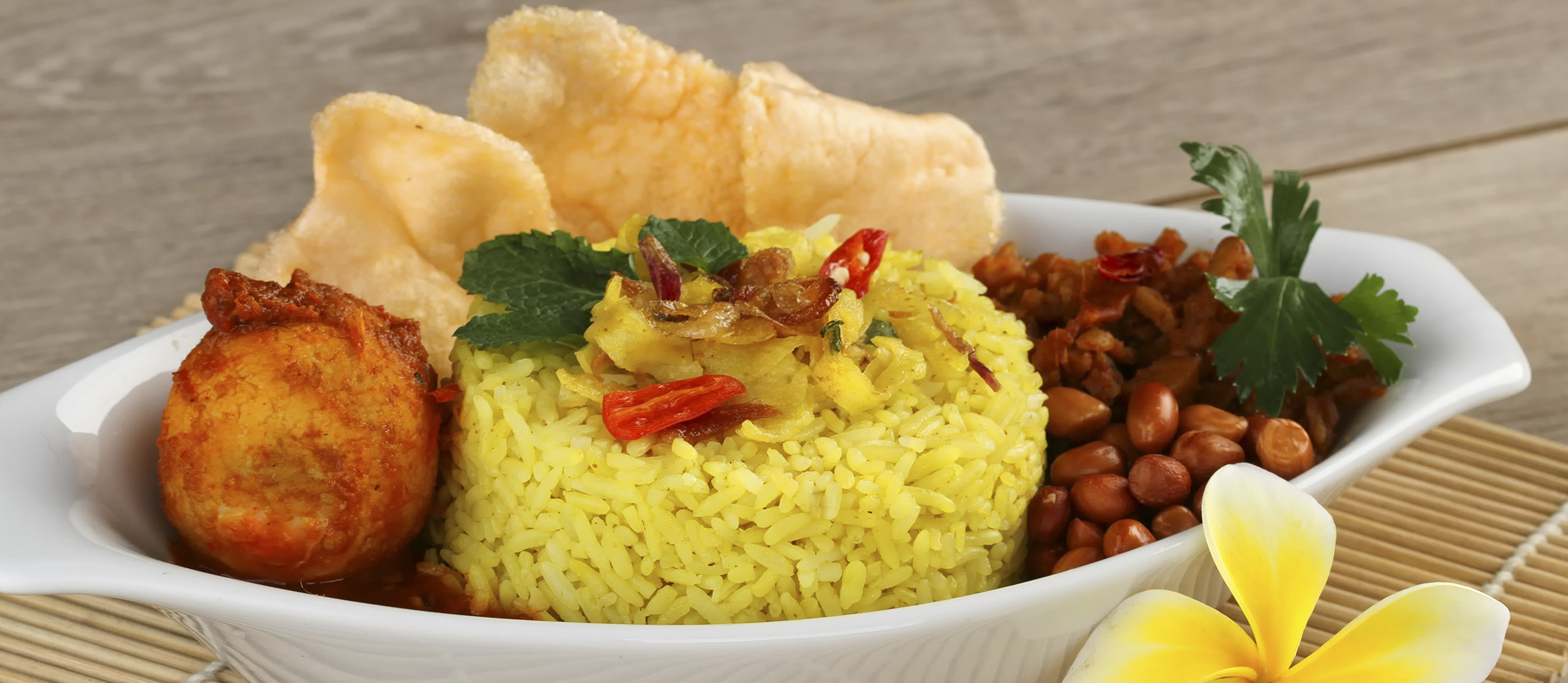
Indonesias vast archipelago has given rise to numerous regional variations of nasi kuning each with its own unique twist Here are some notable examples
- Nasi Kuning Bali Often paired with babi guling roast pork this version emphasizes the richness of coconut milk and the warmth of local spices
- Nasi Kuning Jawa Found in Central and East Java this dish is commonly served during festive occasions and is known for its subtle balance of flavors
- Nasi Kuning Manado Originating from North Sulawesi this variant includes seafood and a tangy sauce reflecting the regions coastal influences
- Nasi Kuning Makassar Known for its use of pala nutmeg and lengkuas galangal this version highlights the distinct spices of South Sulawesi
Each variation showcases the adaptability of nasi kuning and its ability to evolve while maintaining its core identity
Nasi Kuning Beyond Indonesia

While nasi kuning is a quintessential Indonesian dish its influence extends beyond the archipelago In Malaysia for example nasi kuning is popular in Terengganu and Sabah often served with gulai ikan tongkol tongkol fish curry or sambal ikan tongkol In the Philippines a similar dish known as kuning is enjoyed by the Maranao people of Mindanao while in Sri Lanka a comparable dish called kaha buth exists
Interestingly the Filipino version of nasi kuning uses lemongrass instead of coconut milk showcasing how local ingredients shape the dishs character These adaptations highlight the shared culinary heritage of Southeast Asia and the ways in which traditional foods evolve through cultural exchange
The Modern Evolution of Nasi Kuning
In recent years nasi kuning has found new life through the efforts of small and medium enterprises UMKM in Indonesia Many entrepreneurs have started producing frozen versions of nasi kuning making it accessible to a wider audience including urban consumers and modern retail markets This innovation ensures that the traditional dish remains relevant in todays fast paced world
Moreover nasi kuning continues to inspire chefs and home cooks alike who experiment with new ingredients and presentation styles Whether served in a traditional tumpeng format or reimagined as a fusion dish nasi kuning remains a beloved symbol of Indonesian culture
Conclusion
Nasi kuning is more than just a dishits a reflection of Indonesias cultural richness and culinary artistry From its symbolic role in rituals to its versatility in different regions nasi kuning embodies the spirit of community celebration and tradition As it continues to evolve this golden rice remains a cherished part of Indonesian heritage connecting generations through its enduring flavor and meaning